Antique gold
Gold electroplate + oxidised wash
Warm gold on the high points, darkened recesses. The wash is what makes 3D relief readable. House finish for Kitchen Classics and most of the American tour.
Medal design
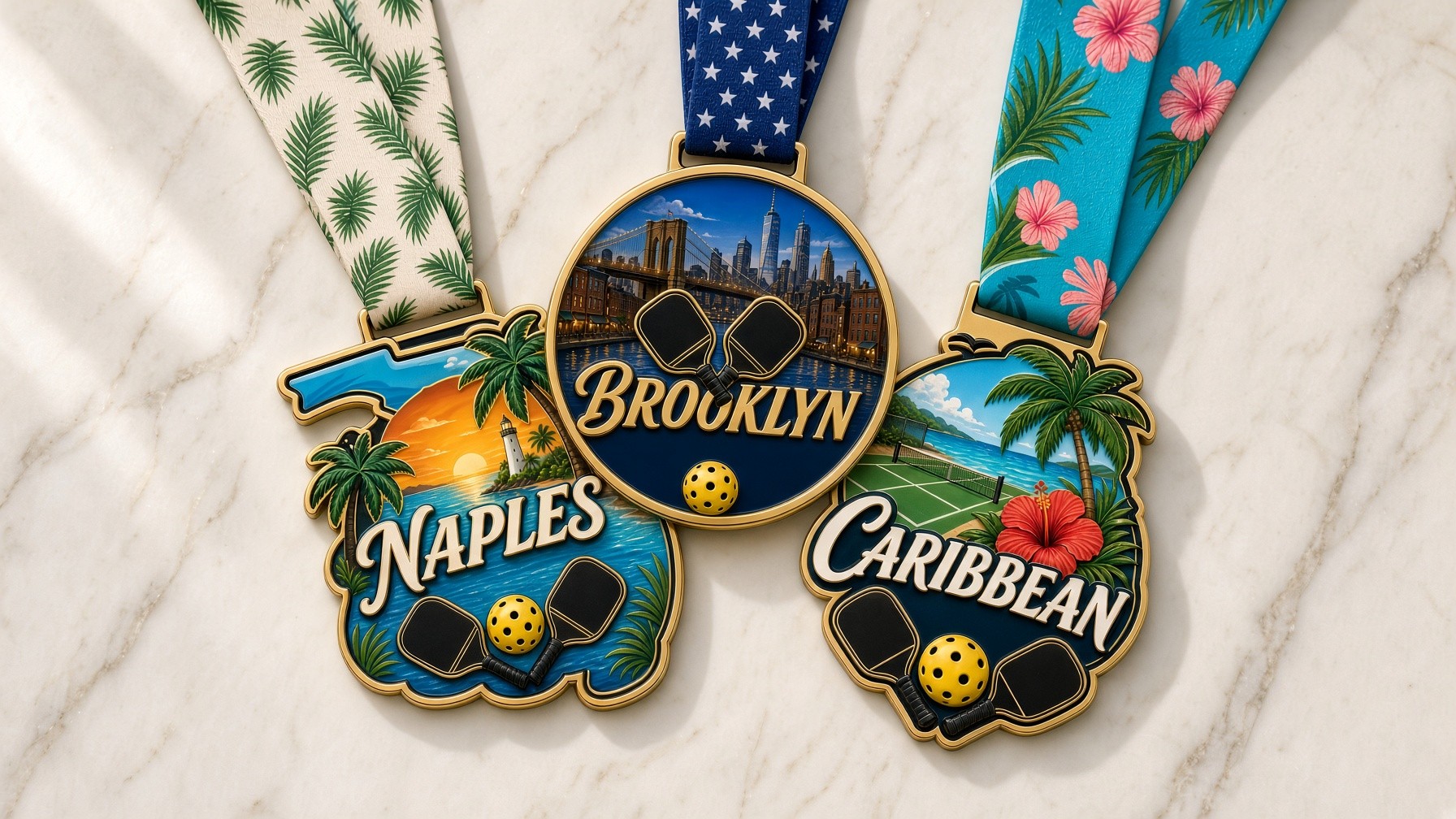
A gold rim, a full-color scene, paddles and a ball, and a ribbon in that place's colors. You play at home. The medal is where the route went.
The lineage
Round, because coins were round. Then finisher medals left the disc — enamel, a plaque, a ribbon you can read from across a room.
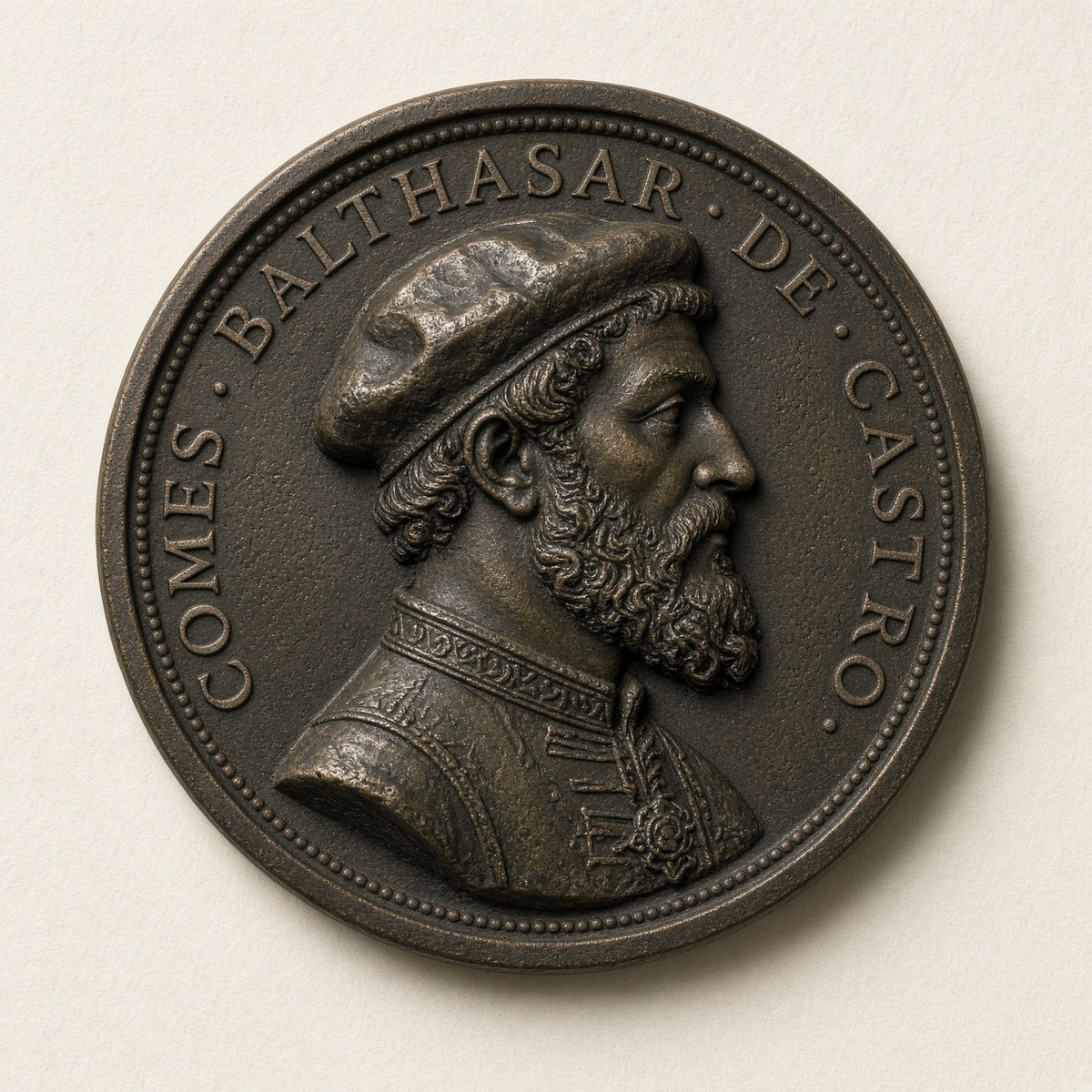
Pisanello casts a bronze portrait medal at the Council of Ferrara — the form most historians call the first Renaissance medal. Round because Roman coins were round. A face on the obverse, a story on the reverse. You hold it. No ribbon yet.
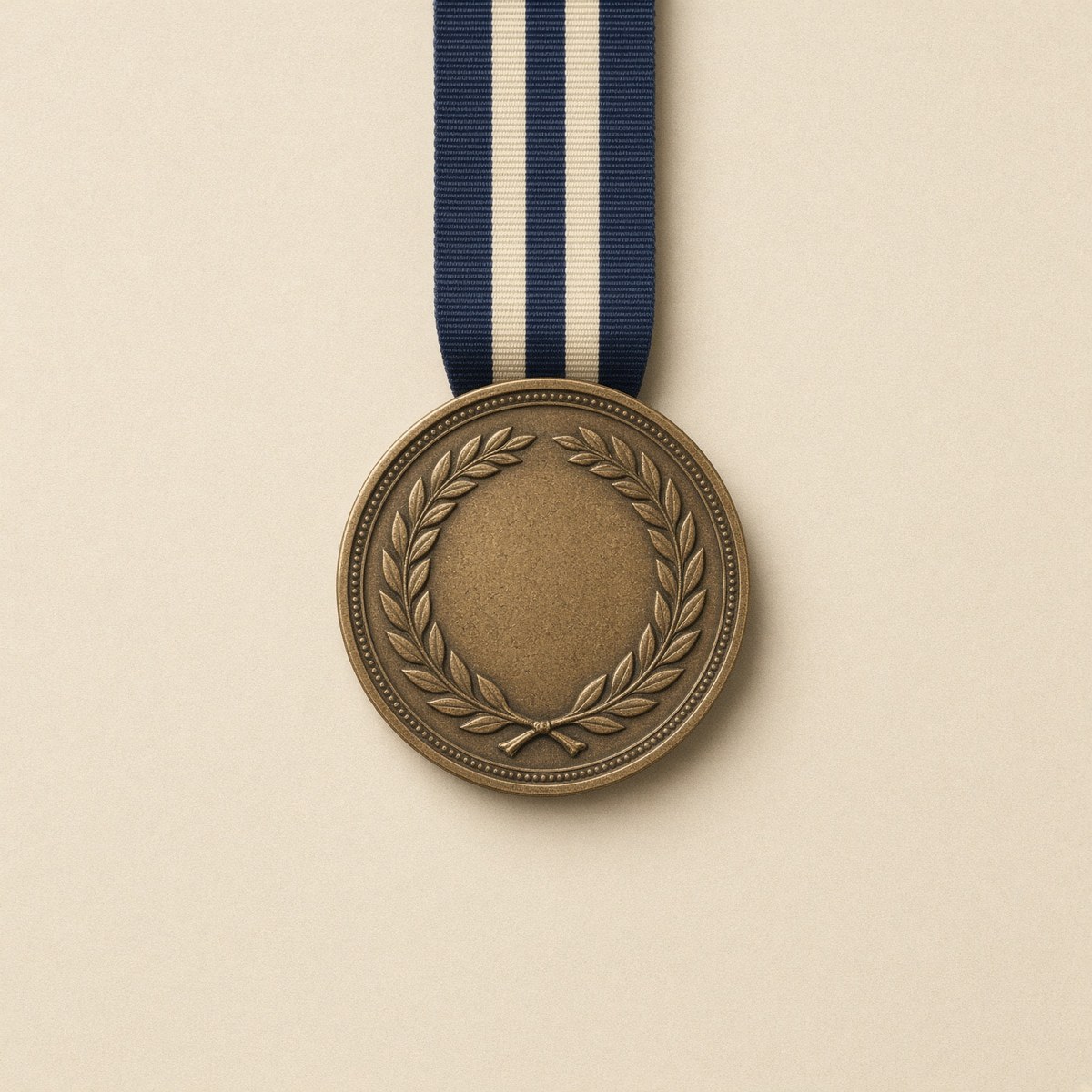
The first Boston Marathon has ten finishers. Each gets a medal. That is the sports finisher: the same object for completing the course, not for beating someone. Ranking medals — gold, silver, bronze — arrive later, at the Olympics.
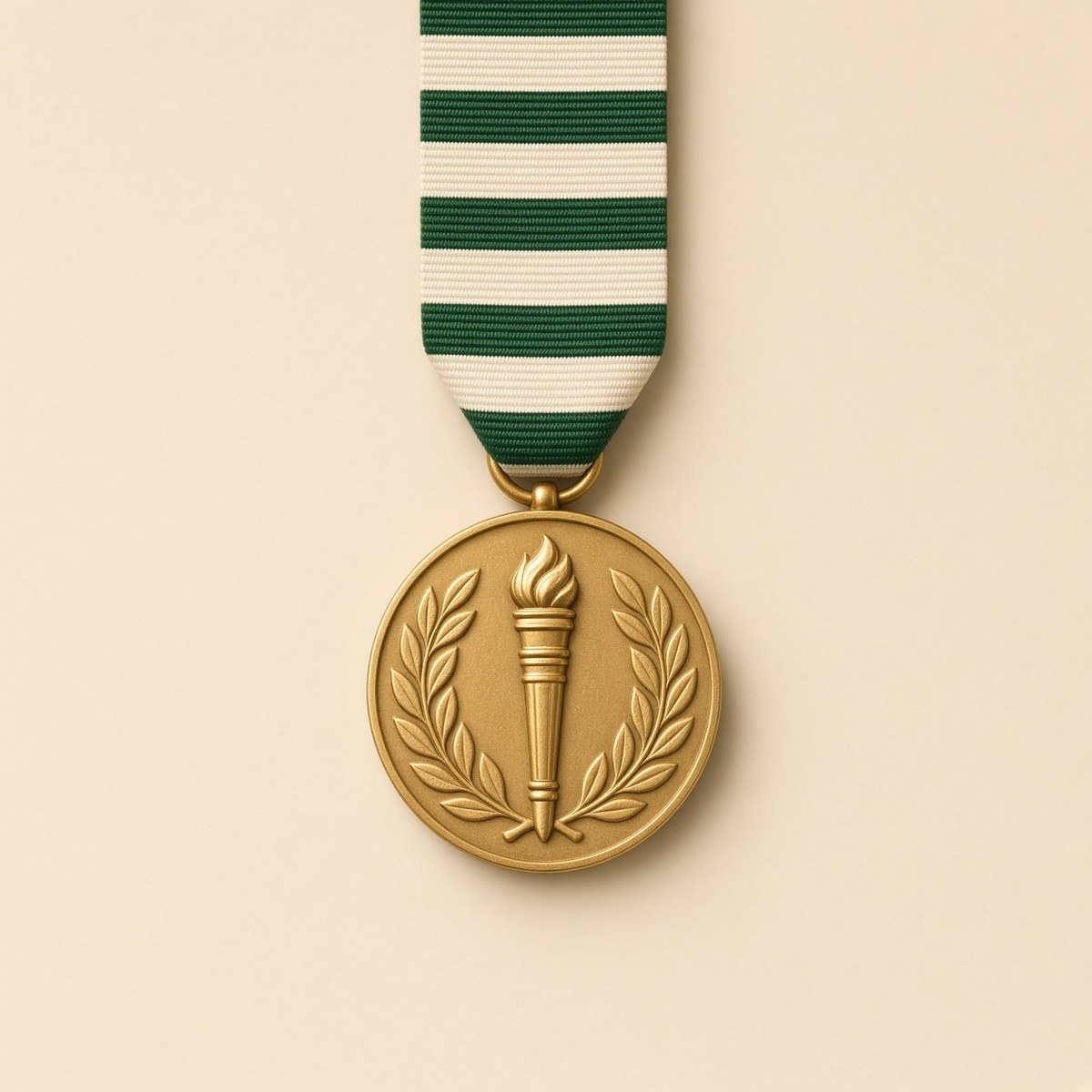
Olympic medals were pinned to the chest until Rome hung them on a chain. The coloured ribbon follows. Military campaign medals had already solved this: a bar you can read from across a room when the metal is in a drawer.
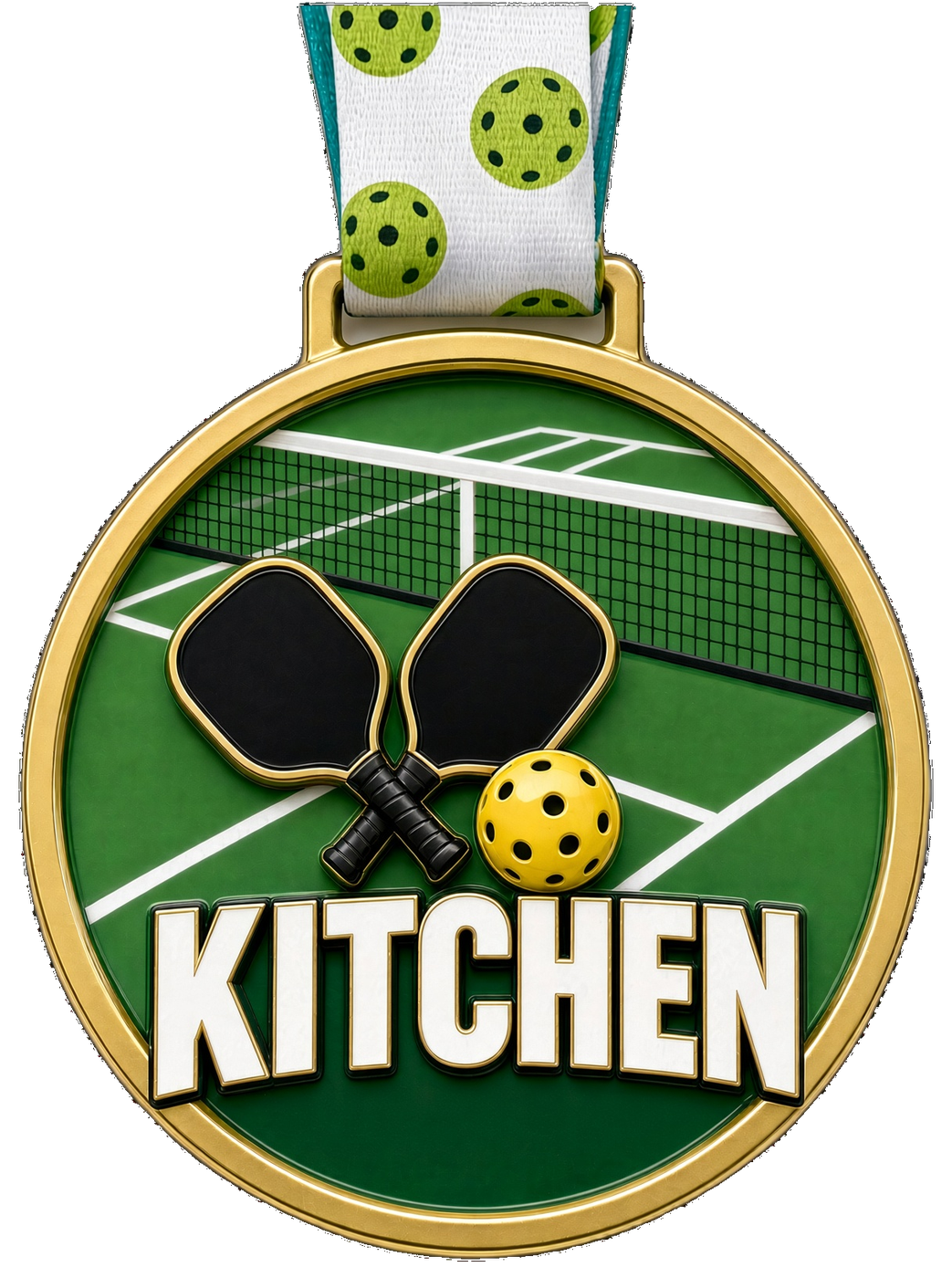
Soft enamel, a gold rim, the route drawn as a scene — a kitchen, palms, a bridge. A ribbon in that place's colors. You play at home. The medal arrives in the mail. Same medal for everyone who hits the count — closer to those ten in Boston than to a podium.
The vocabulary
The collection
The Kitchen Line
24 games · Any court
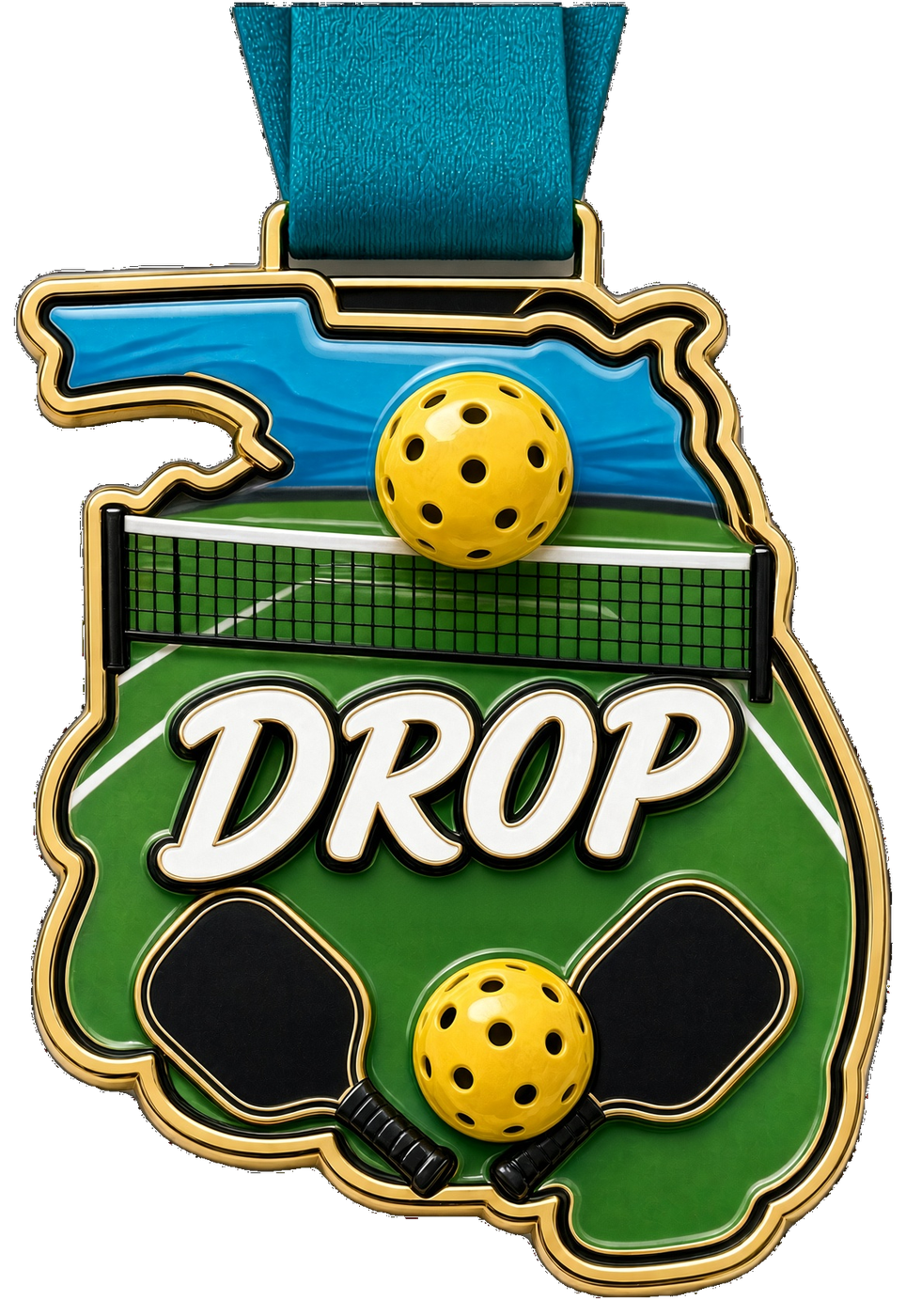
The Third Shot Drop
24 games · Any court
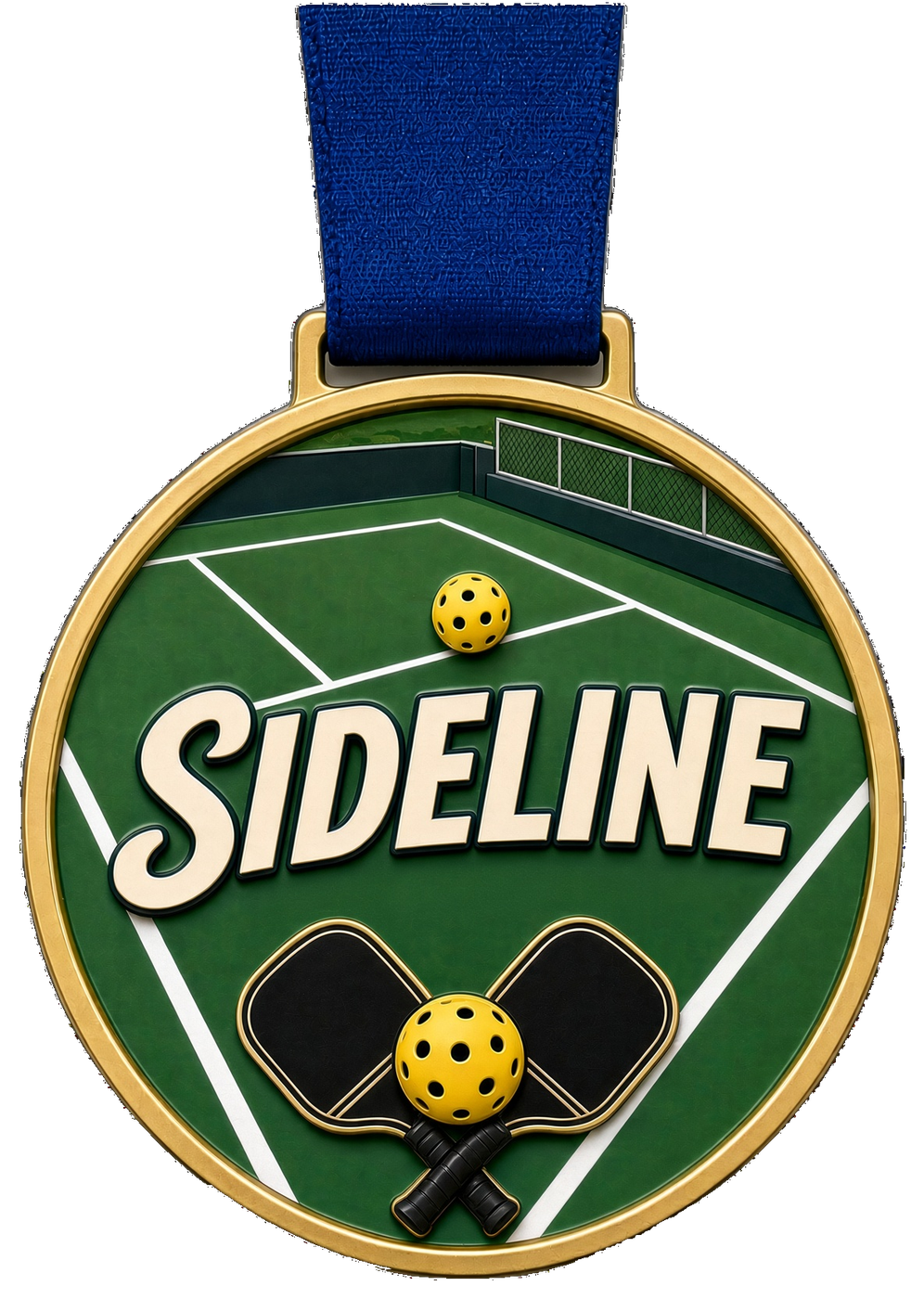
Sideline to Sideline
24 games · Club & rec courts
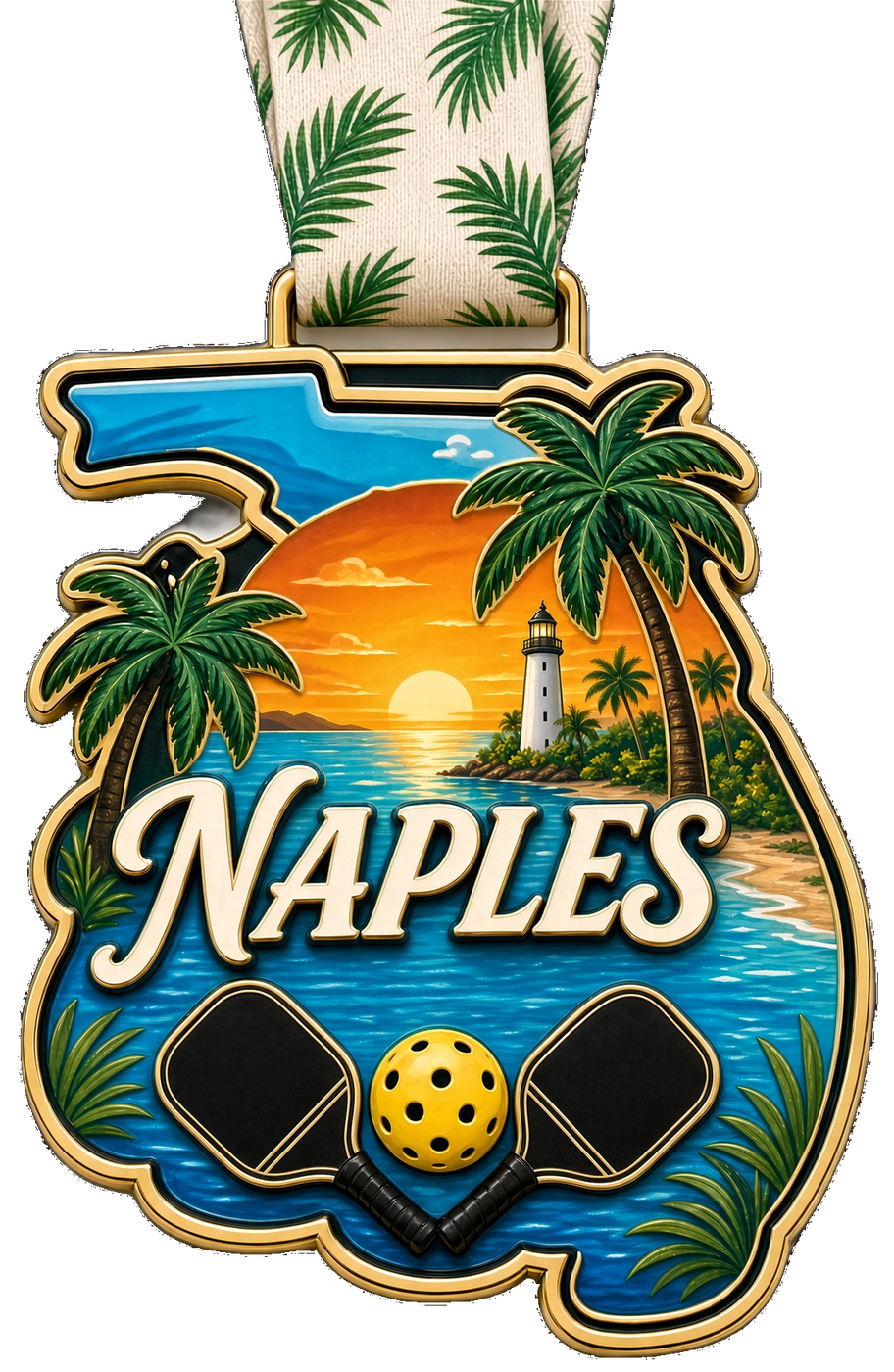
Naples Circuit
24 games · Naples, Florida
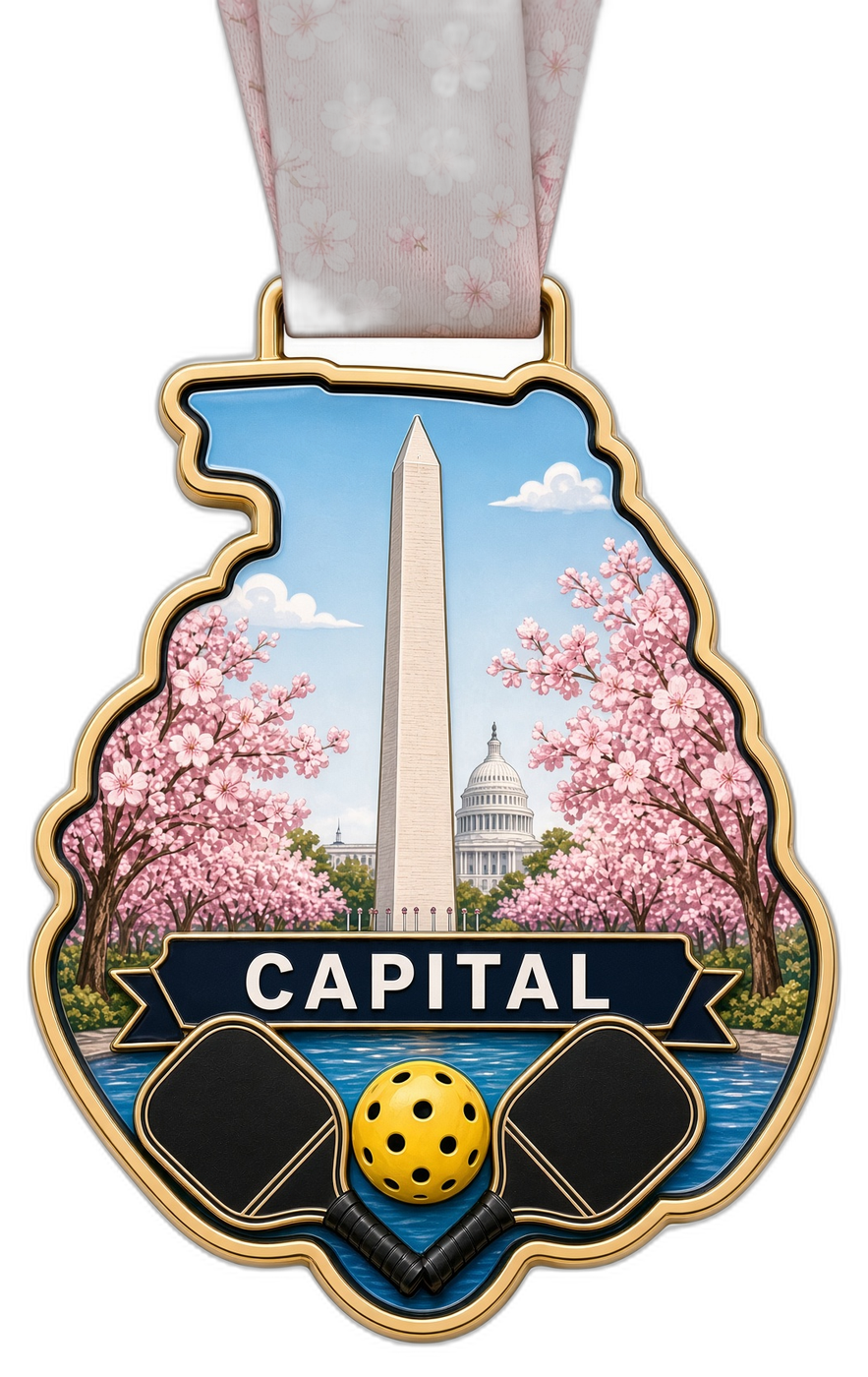
Capital Courts
24 games · Washington, DC
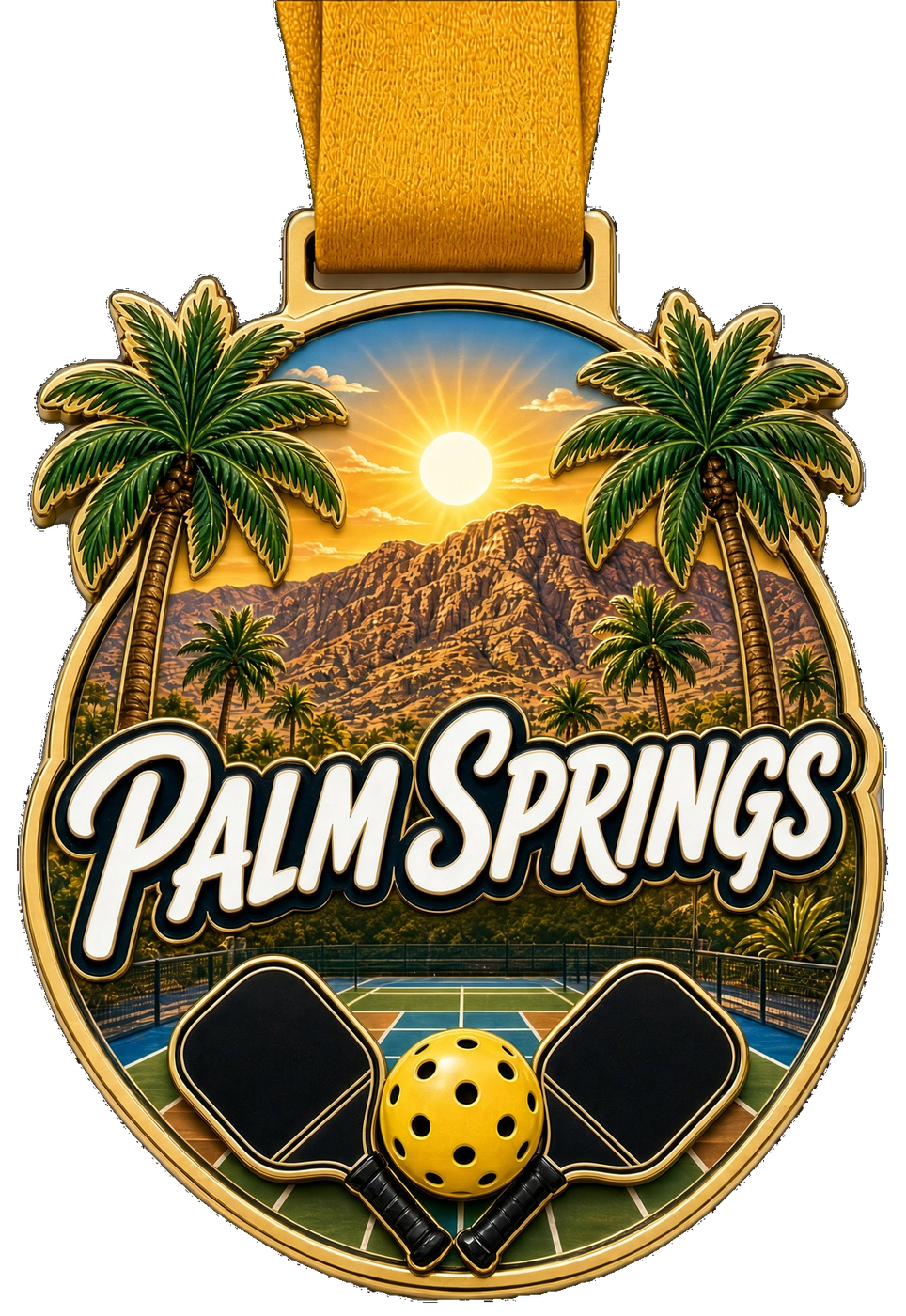
Palm Springs Desert Smash
30 games · Palm Springs, California
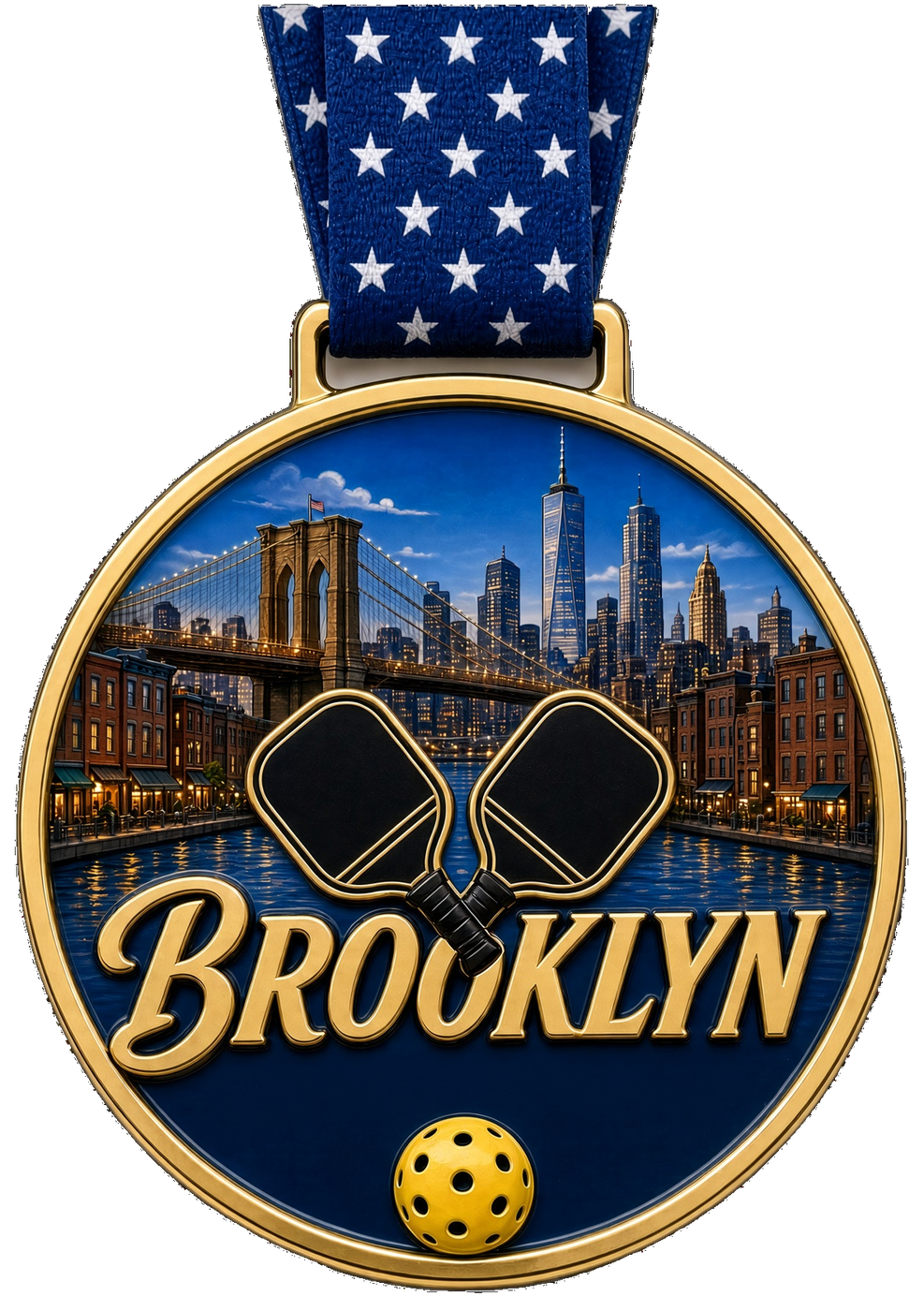
Brooklyn Mixers
24 games · Brooklyn, New York
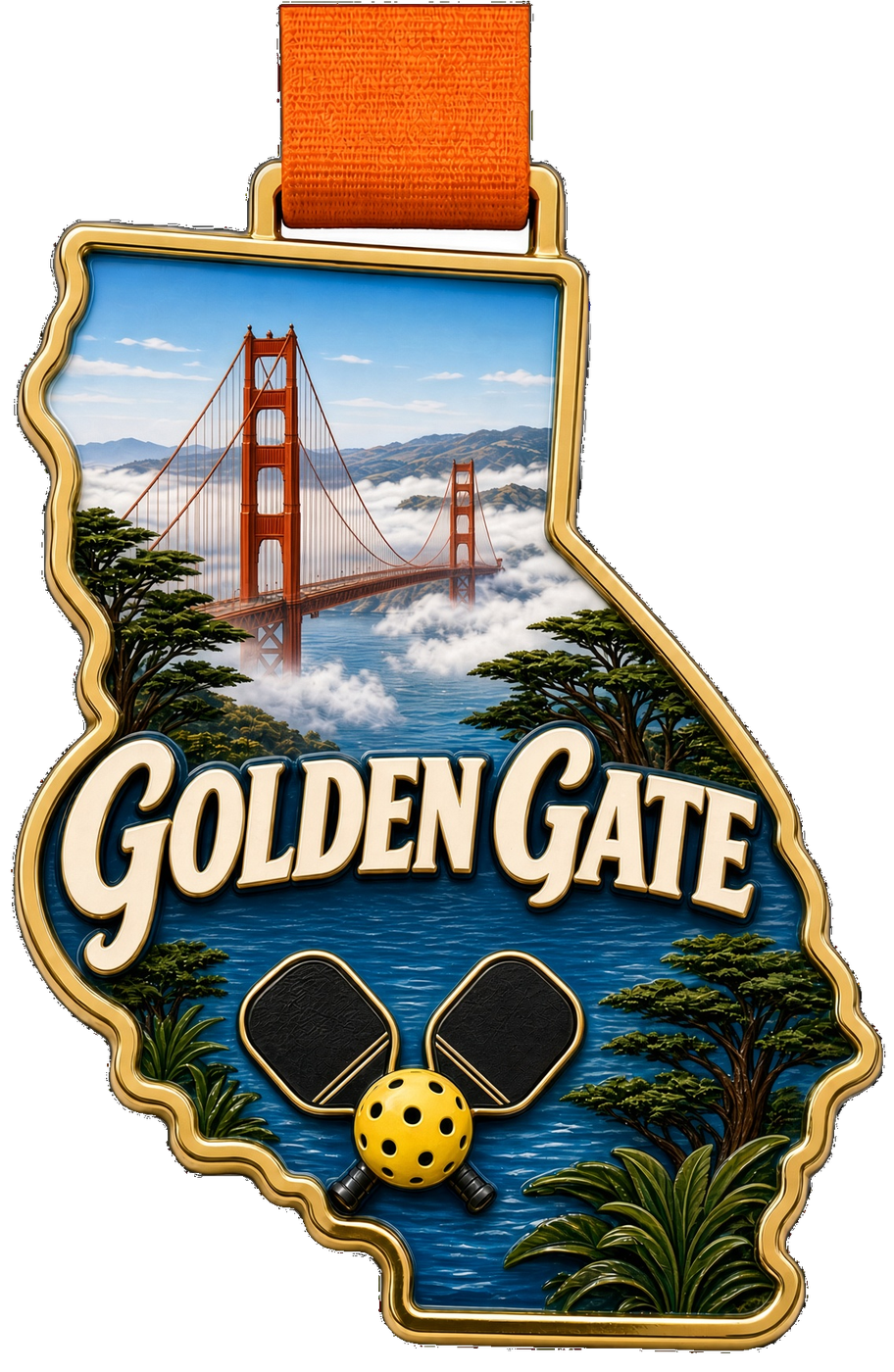
Golden Gate Dink
32 games · San Francisco, California
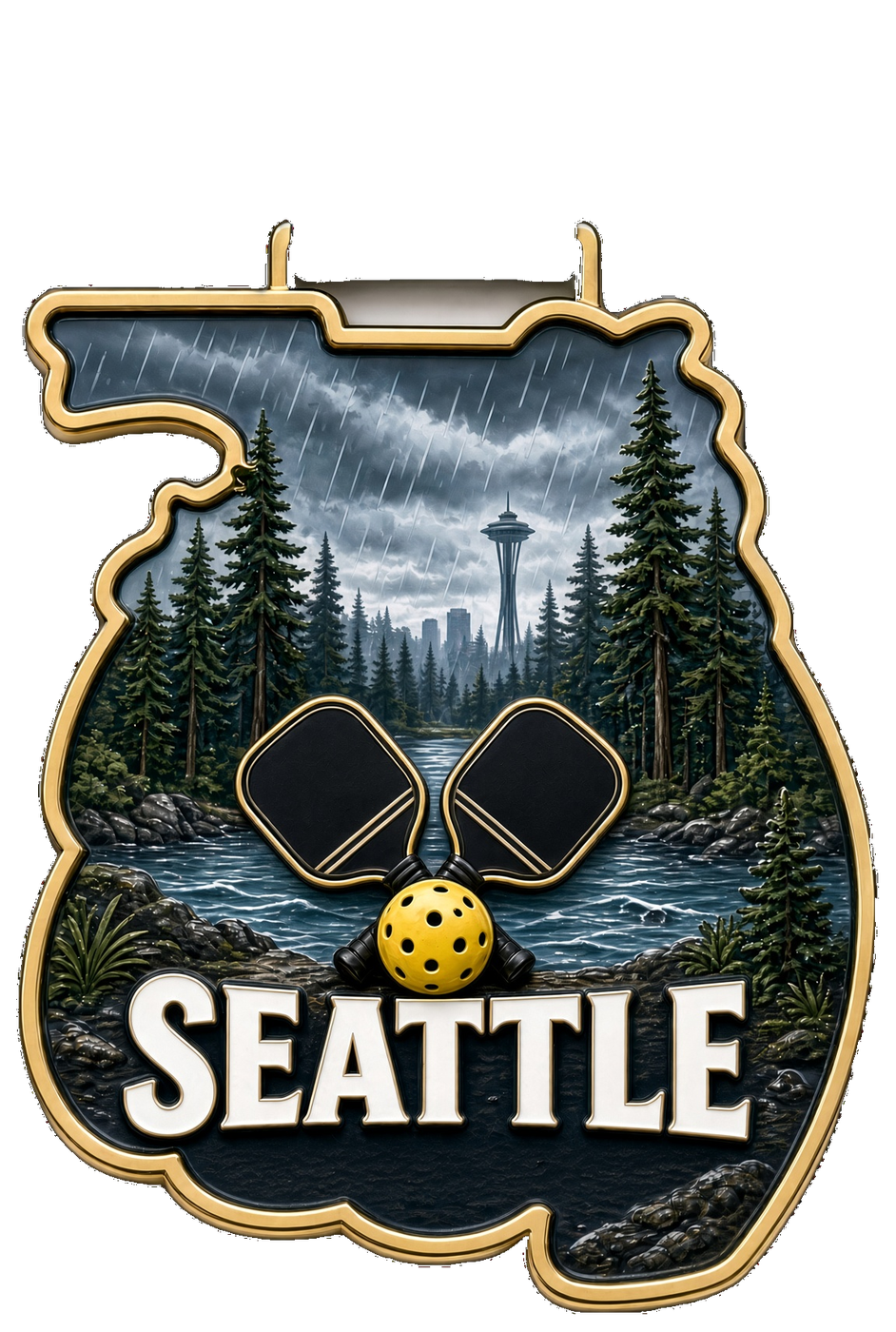
Seattle Rain Rally
28 games · Seattle, Washington
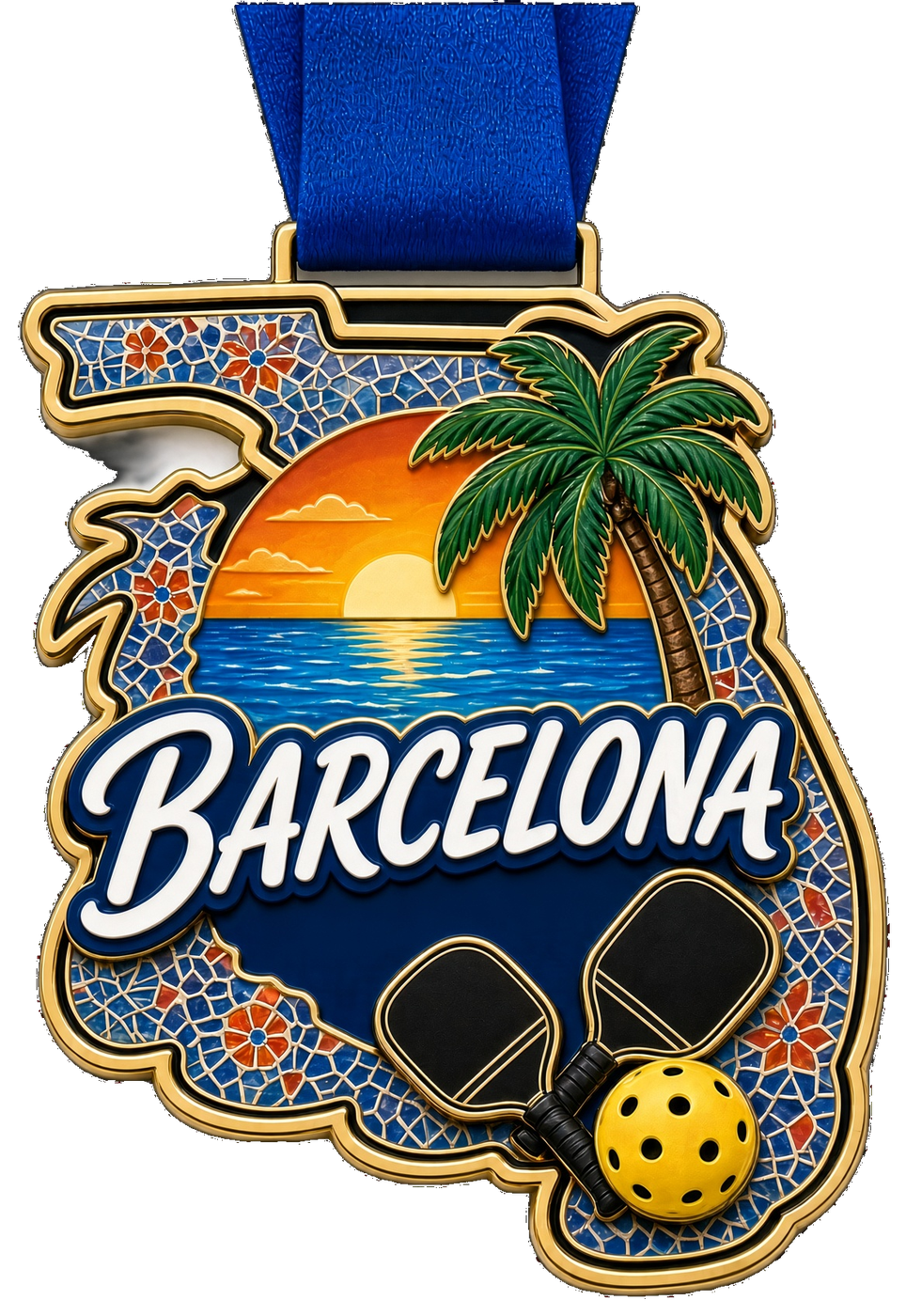
Barcelona Open Courts
40 games · Barcelona, Spain
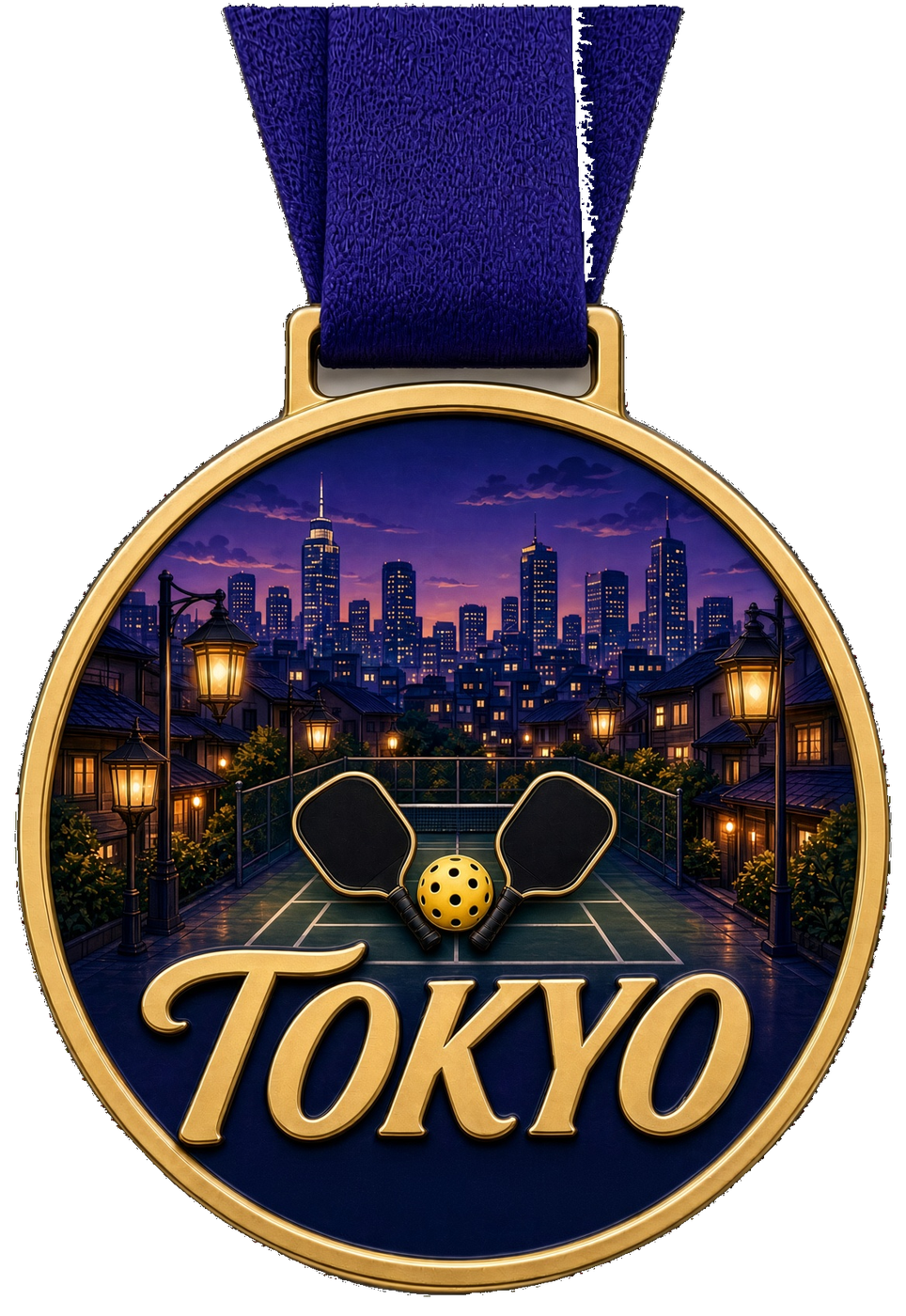
Tokyo Paddle Tour
36 games · Tokyo, Japan
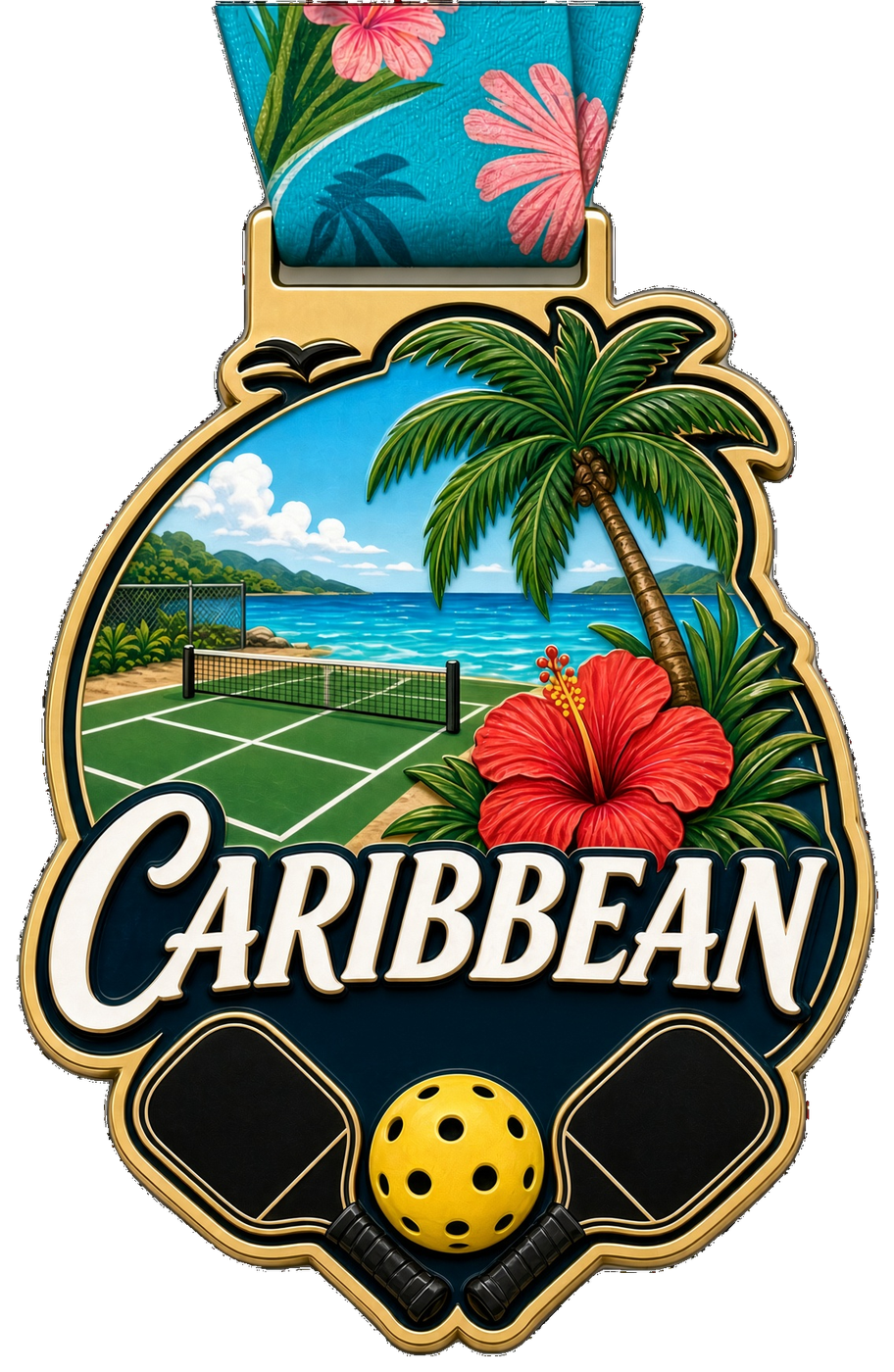
Caribbean Court Hop
44 games · Island courts
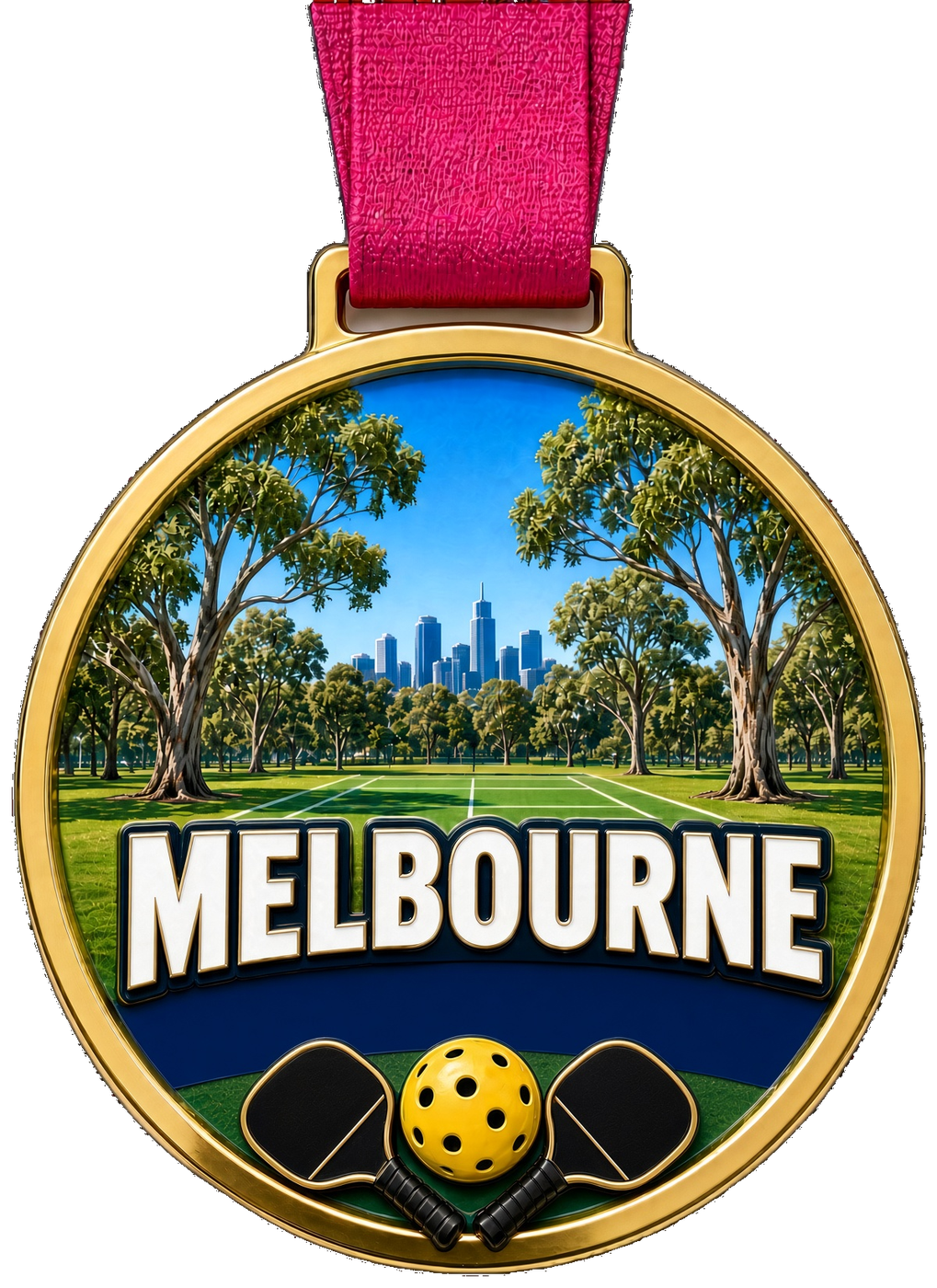
Melbourne Heatwave
30 games · Melbourne, Australia
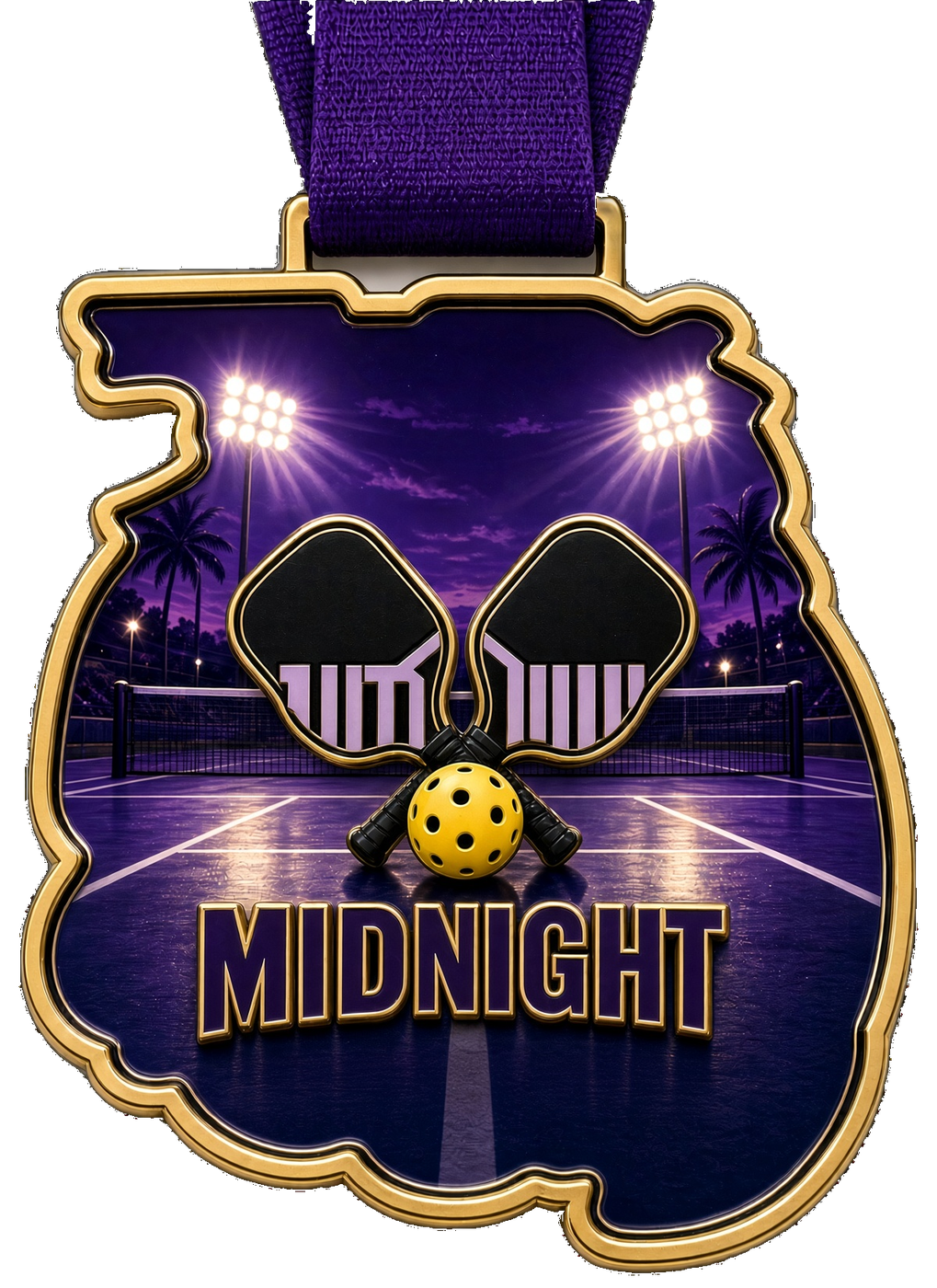
Midnight Mixer
24 games · Night courts
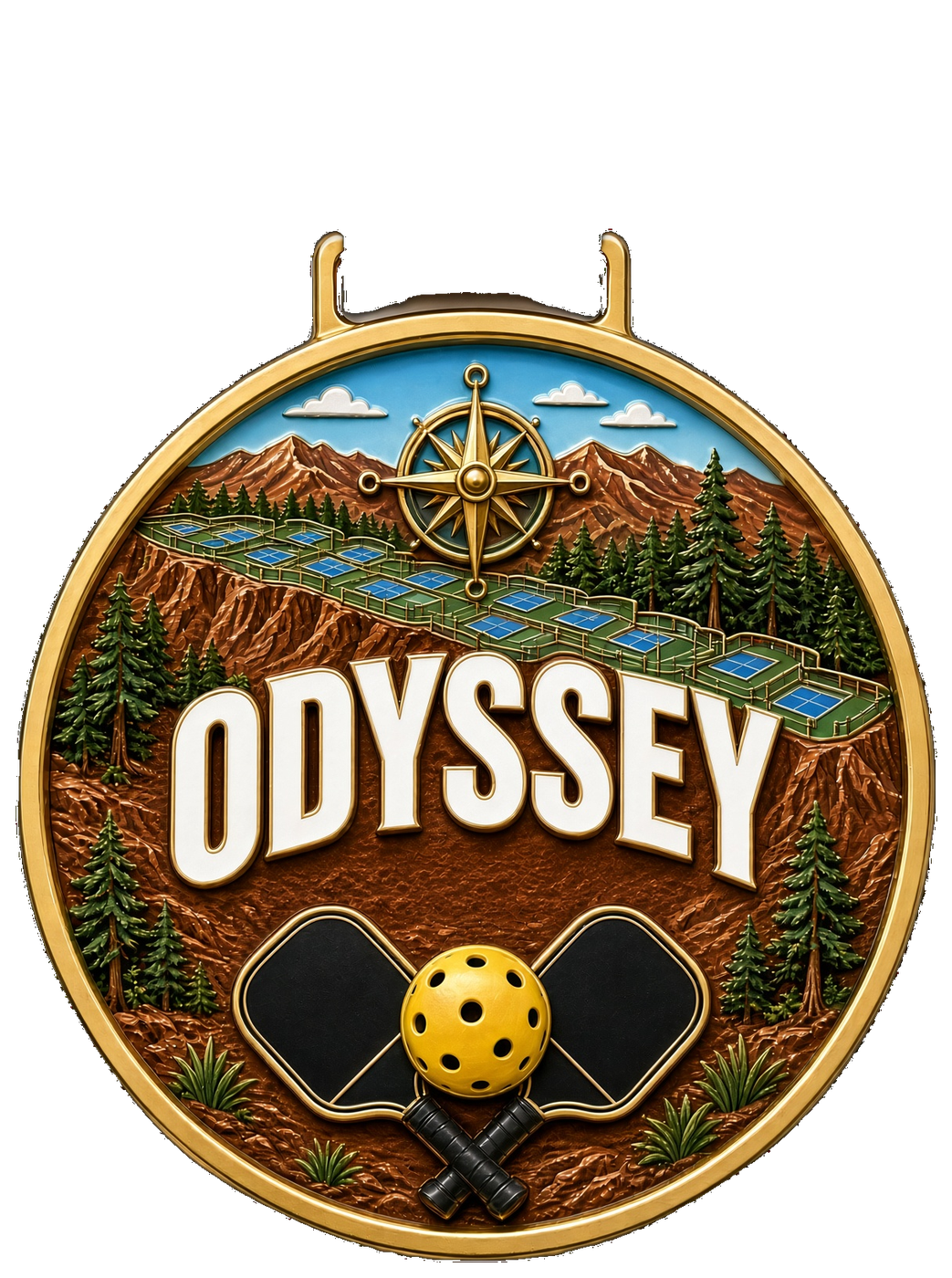
The Dinker's Odyssey
80 games · Everywhere
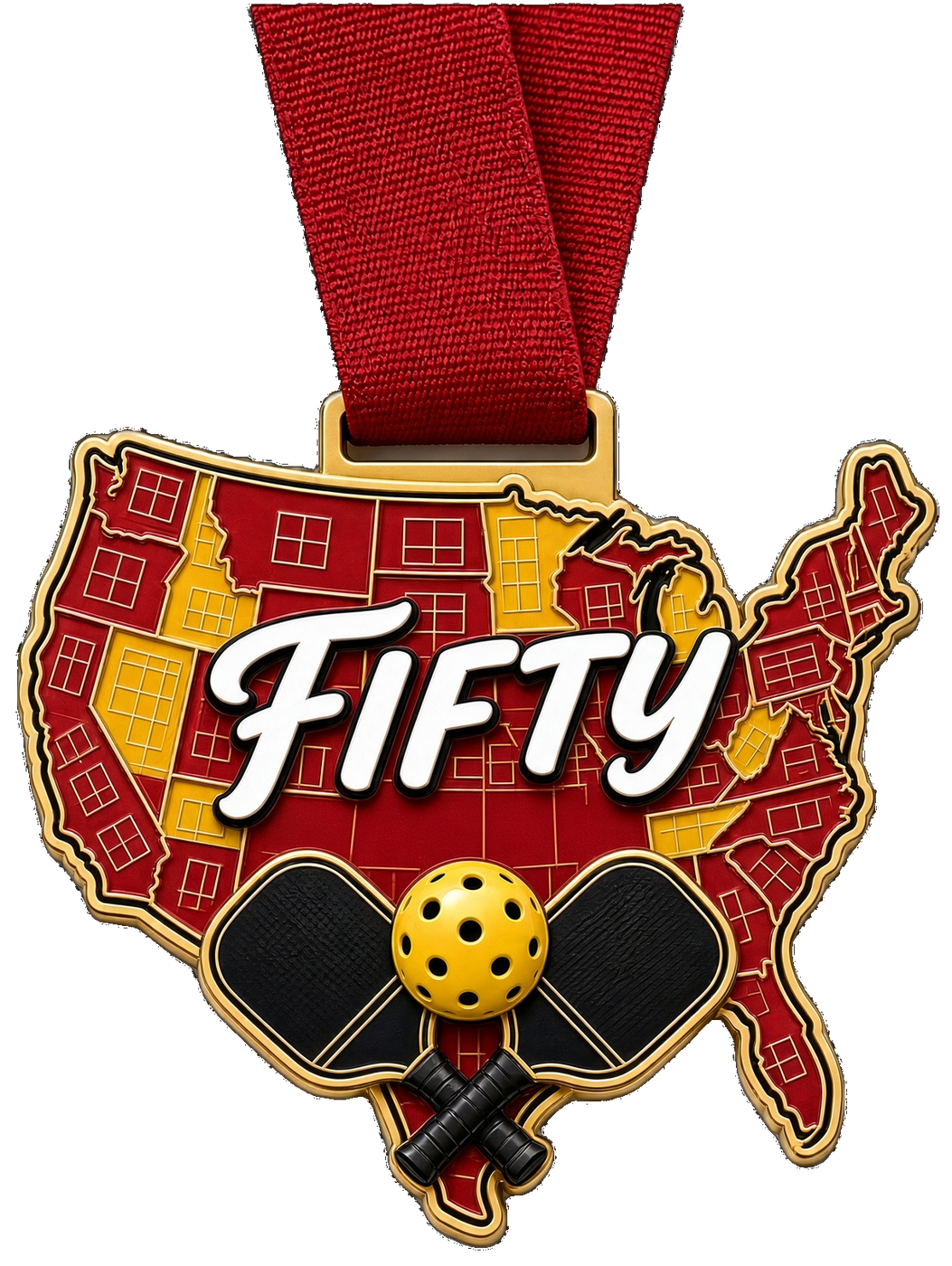
The 50-Court American Tour
100 games · United States
The foundry
Renaissance medals were cast. Mints later struck them from dies. Modern race medals came back to casting: zinc alloy injected into a steel mold, because 3D relief at volume is a casting problem. The raw disc is silvery-grey. It is not gold yet.
The casting is polished, then hung in a plating bath. Gold, nickel, copper, or black nickel — a skin, not a nugget. The last solid-gold Olympic medals were too expensive to keep.
Soft enamel fills the scene. Raised gold lines stay bright. The ribbon matches the route, so you can tell Naples from Brooklyn before you read the name.
Gold electroplate + oxidised wash
Warm gold on the high points, darkened recesses. The wash is what makes 3D relief readable. House finish for Kitchen Classics and most of the American tour.
Nickel plate + charcoal wash
Cool pewter with a charcoal antique. Hides fingerprints. Used where the place is grey water, fog, or a long map.
Copper plate + brown patina
Earthy, heavy in the hand. Recesses go almost black. Desert, Odyssey, and other long-wear medals.
Bright gold, no antique wash
Mirror plate. First medals and tropical enamel sit on this so the color, not the patina, does the talking.
Gunmetal nickel, polished
Near-black until the light hits it, then it flashes like silver. Night courts, Tokyo dusk, Brooklyn steel.
Gold bezel over black nickel disc
Two baths, masked. The outer ring stays gold; the inner field goes dark. Championship contrast. Golden Gate and the 50-Court atlas.
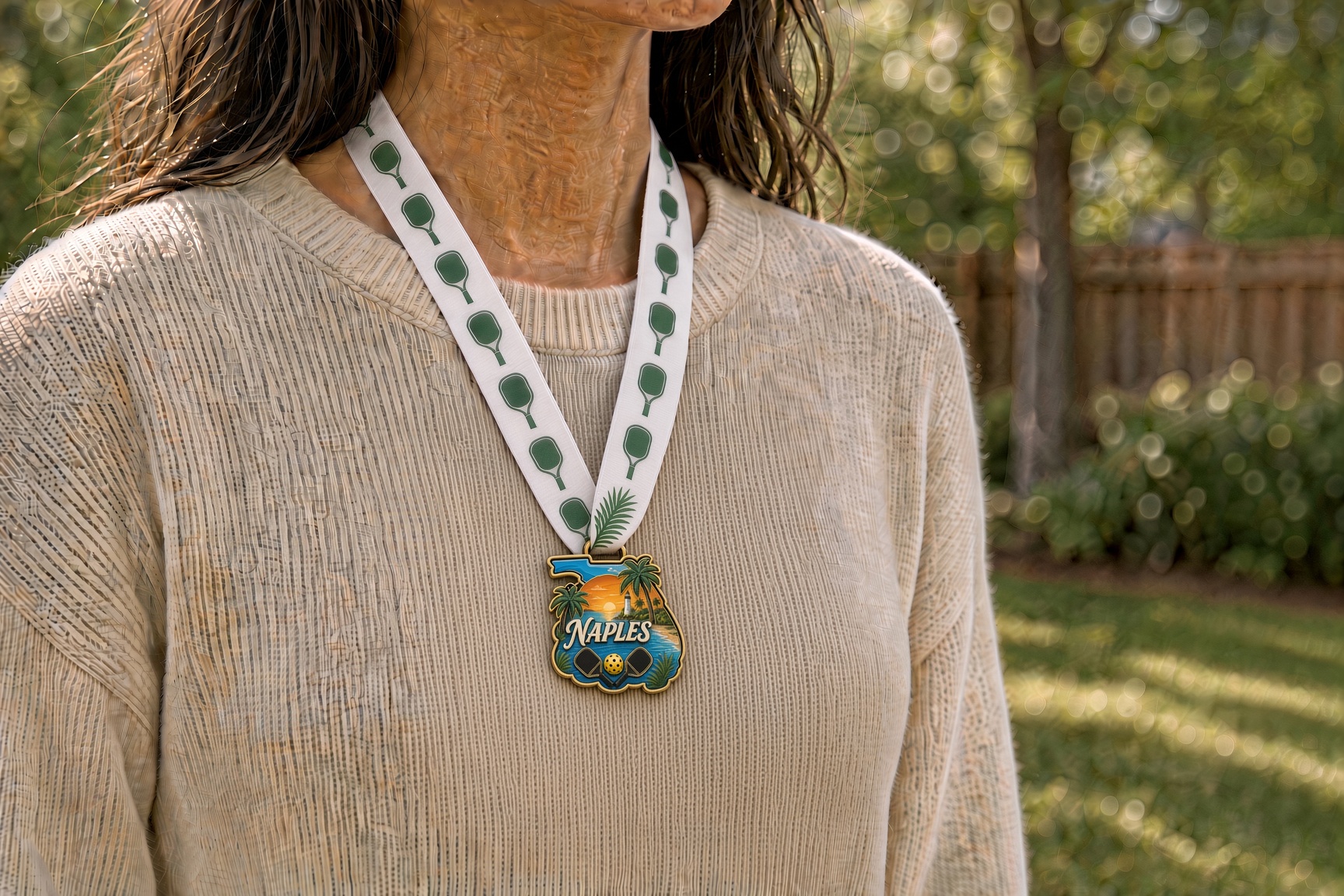
No start-line expo. No packet pickup. When the game count is done you claim the medal in your rally log and it leaves the workshop. Shipping is inside the United States only. The ribbon is meant to be worn on the court the next week, not stored in a drawer — the same reason campaign medals hung from a bar instead of living in a box.